
The Importance of Sleep Health: Get Better Rest





According to The National Health and Morbidity Survey 2023, 38% of Malaysian adults are not getting enough sleep. And this issue is becoming more concern in the survey run by a Malaysian mattress company, Sonno, in 2024 that shows there are 87.5% of Malaysians having sleeping issues, including insomnia, frequent waking, or difficulty falling asleep.
You are not alone if you find it hard to get out of bed, feel tired during the daytime, experience brain fog, or feel moody, anxious or depressed. You might just need to improve the quality of sleep.
What is quality sleep?
Quality sleep means you are getting uninterrupted and refreshing sleep throughout the night. One of the primary markers of sleep quality is sleep continuity, your ability to sleep continuously so that you can cycle through all stages of sleep (including REM, light and deep sleep). Tossing and turning in bed for 12 hours won’t be as good for you as seven uninterrupted hours of sleep.
A quality sleep delivers a wide range of mental and physical health benefits. Over time, consistently good sleep can help strengthen your immune system, improve emotional regulation, and support long-term wellbeing.
“Over time, consistently good sleep can help strengthen your immune system, improve emotional regulation, and support long-term wellbeing.”
In an age where stress, anxiety and digital distractions dominate our lives, falling asleep and staying asleep can be difficult for many people. Here are some simple practices that might help:
Creating a relaxing environment conducive to uninterrupted sleep.
A common recommendation is to keep your bedroom cool, dark and quiet.
Avoiding electronic screentime in the hour before you sleep.
Screens emit a type of blue light that affects the production of melatonin (a hormone that makes us feel drowsy and sleepy).
Maintaining a consistent sleep schedule.
Go to bed and get up at the same time every day.
Make sure to have 7-9 hours of sleep every night.
Following a bedtime routine that helps you fall asleep.
Reading or stretching
Turn on calming music / guided meditation.
Scented candle if needed.

5. Establishing daytime habits that optimize restful sleep at night.
Your actions during the day can affect your sleep at night.
Avoid long and late-afternoon naps.
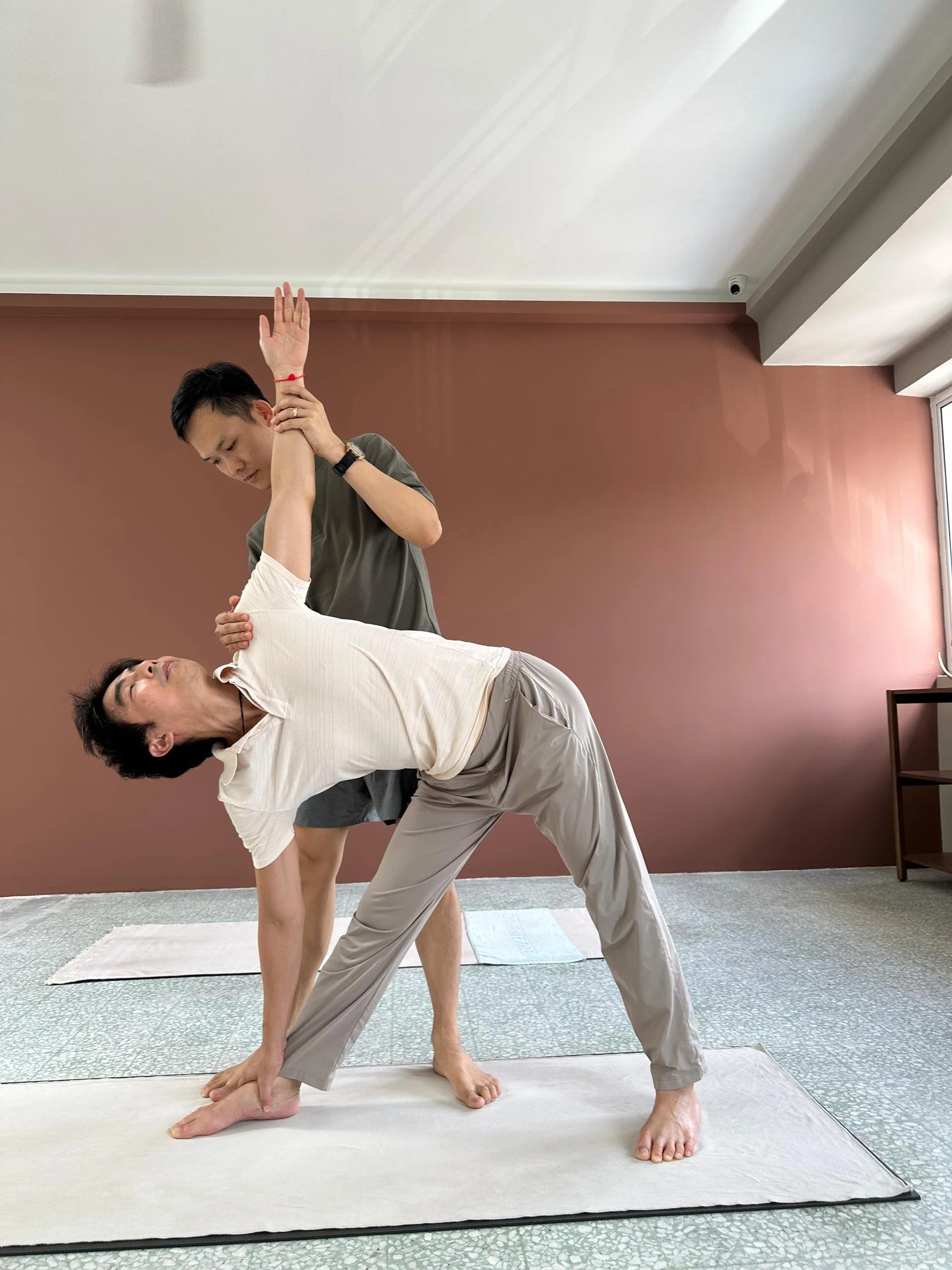
Exercise regularly (walking in a park, yoga and, etc)
6. Attending a sound healing session.
Sound Healing is a practice that uses different types of sounds and vibrations to relax your body and calm your mind.
Slow and steady sounds can shift your brainwaves to a calmer state. Studies have shown that sound healing can enhance deep sleep by influencing delta wave activity (deep sleep stage) in the brain.
Every individual experience may vary; it may take time for you to find what works best for you.

Hannah Tan
Chief Relaxation Officer & Mysore Room Yoga Teacher. Hannah teaches our Signature Rest Ritual at Mysore Room every Monday thru Thursday at 8-9pm to help you sleep better, remove stress and make mental health a regular actionable habit.